FAST & HANDS-ON TRAINING
GET TRAINED IN JUST 4 HOURS
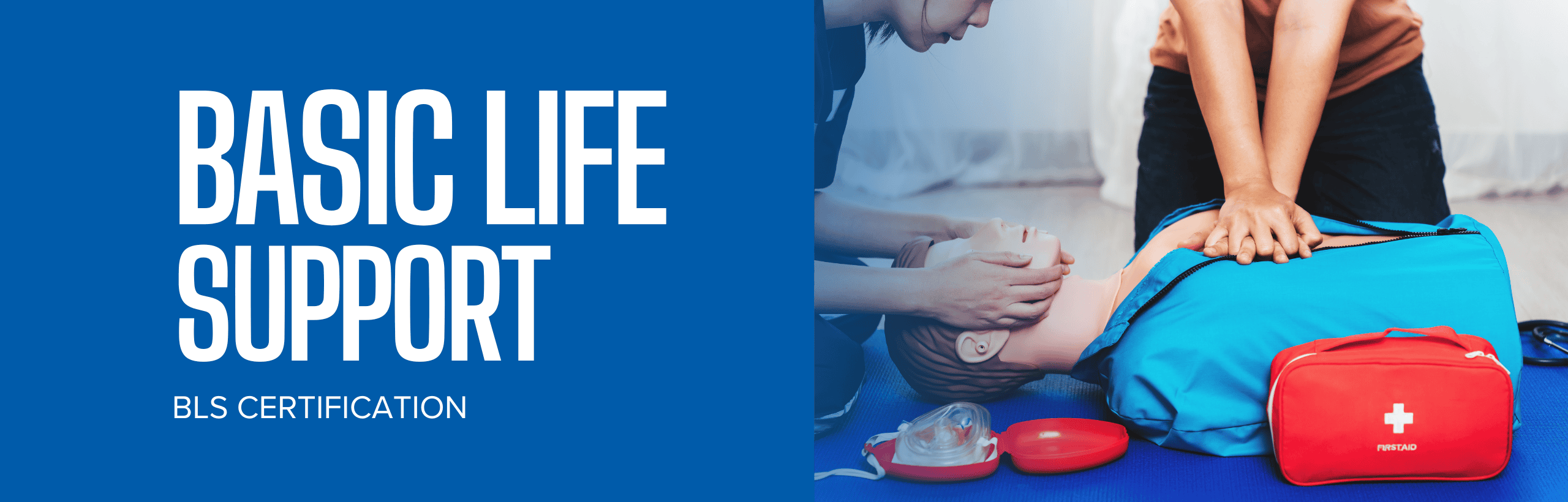
The BLS course follows the latest American Heart Association (AHA) guidelines and is designed for healthcare professionals and other personnel in and out of the hospital setting. Students will learn high-quality CPR for adults, children, and infants, use of an automated external defibrillator (AED), effective ventilation using a barrier device, and the importance of early CPR and defibrillation. The course includes hands-on practice, team dynamics, and real- world scenarios to reinforce skills and confidence in life-saving situations. Upon successful completion of this course, students will receive an AHA BLS Provider certification, valid for two years.
Enrollment Available Year-Round
Limited spots available each session.
CURRICULUM
PROGRAM CURRICULUM
BLS 101- Introduction to Basic Life Saving (BLS)
Students will learn about the importance of high-quality CPR, the appropriate use of an AED, how to provide effective ventilation with a barrier device, and how to respond to emergency situations. Students will learn about team dynamics and the chain of survival. Students will learn how to relieve foreign-body airway obstruction for adults, children, and infants. Students will be able to describe the importance of high-quality CPR and its impact on survival.
BLS 201- Skills Demonstration & Assessment
Students will demonstrate proper application of CPR, AED usage, effective ventilation, and relieving foreign-body airway obstruction. Students will demonstrate these skills in a variety of emergency situation scenarios. Students will demonstrate these skills in both individual and team rescue response.

REQUREMENTS